How to Update a WordPress Theme Without Losing Changes
To update a WordPress theme, go to Dashboard > Updates, tick the theme under Themes and click Update Themes, or click update now in the notice on Appearance > Themes. For a premium theme that does not update itself, upload the new ZIP file under Appearance > Themes > Add Theme > Upload Theme and click Replace installed with uploaded.
These steps are for WordPress 7.1, the current release (7.1.4). We checked every button label below against the WordPress 7.1.4 source code on 6 November 2026. One label has changed over the years: the upload button read "Replace current with uploaded" when the feature arrived in WordPress 5.5, "Replace active with uploaded" in 6.7, and "Replace installed with uploaded" from 6.8 onwards. Older tutorials, including the one that used to be on this page, use the old wording or tell you to delete the theme and reinstall it, which you no longer need to do.
What should you do before updating a theme?
- Back up your site. WordPress itself shows the message "You are updating a theme. Be sure to back up your database and files first." when you upload an update. The WordPress backup guide explains what to save.
- Check where your changes live. An update replaces the theme's files. Any code you added directly to the theme, such as edits to
functions.phporstyle.css, is lost. Changes made in Appearance > Editor (the Site Editor) on a block theme are saved in the database, so they survive an update. - Use a child theme for code changes. The WordPress theme handbook says a child theme lets the parent theme update without losing your modifications. Our guide on creating a child theme manually walks through it.
How do you update a theme from the Updates screen?
This works for any theme from the WordPress.org directory, and for premium themes that connect to their seller's update service.
- Go to Dashboard > Updates.
- Scroll to the Themes section. WordPress lists every theme with a new version.
- Tick the theme you want to update (or Select All).
- Click Update Themes. WordPress downloads the new version, puts the site in maintenance mode for a moment and installs it.
How do you update a theme from the Themes screen?
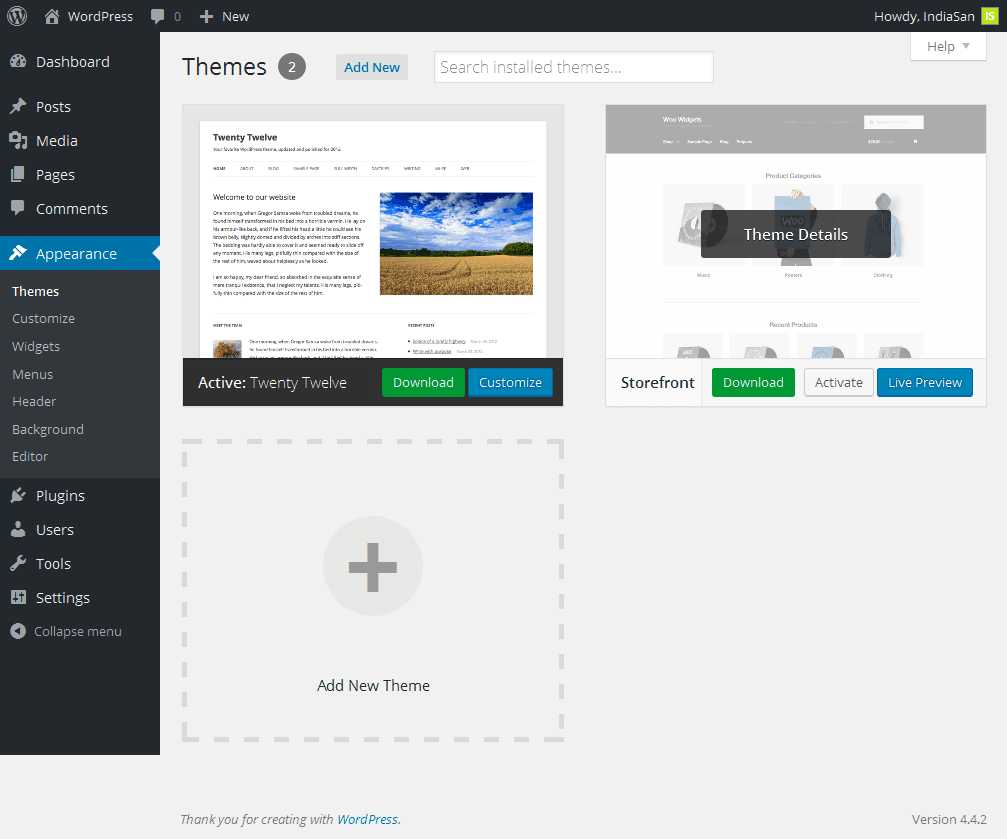
- Go to Appearance > Themes. Themes with an update show New version available. Update now on their card.
- Click Update now.
- Or click the theme, then use the notice "There is a new version of [theme] available" in the theme details. The View version ... details link shows the changelog first, and update now installs it.
If the notice says the new version "does not work with your version of WordPress" or "of PHP", update WordPress or ask your host to update PHP before updating the theme.
How do you update a premium theme with a ZIP file?
Many paid themes do not appear on the Updates screen. Download the latest ZIP from your account with the theme seller, then:
- Go to Appearance > Themes and click Add Theme.
- Click Upload Theme, choose the ZIP file and click Install Now.
- WordPress sees that the theme is already installed and shows "This theme is already installed." with a table comparing the Installed and Uploaded versions: theme name, version, author, required WordPress and PHP versions and parent theme.
- Check that the uploaded version is newer, then click Replace installed with uploaded. Click Cancel and go back if something looks wrong.
Two safety checks are built in. If the uploaded theme needs a newer PHP or WordPress version than you have, WordPress blocks the update and explains why. If the uploaded version is older than the installed one, it warns you that you are about to downgrade.
Some sellers ship a download that contains documentation and other files as well as the theme. Upload only the theme's own ZIP file, not the whole package.
How do you turn on automatic theme updates?
- Go to Appearance > Themes and click the theme.
- In the theme details, click Enable auto-updates.
WordPress then shows the estimated date of the next update. Auto-updates rely on WP-Cron, WordPress's built-in task scheduler, so they run when your site gets visits or when your host runs the scheduler. Turn auto-updates off with Disable auto-updates on the same screen. See the WordPress documentation on plugin and theme auto-updates for details.
Can you update a theme by FTP?
Yes, but use it only when you cannot reach the dashboard, for example after a failed update.
- Extract the new theme ZIP on your computer.
- Connect to your site with an FTP client or your host's file manager and open
wp-content/themes. - Rename the current theme folder (for example add
-oldto its name) so you have a copy. - Upload the new theme folder with exactly the original folder name.
- Check your site, then delete the renamed old folder.
What should you check after updating?
- Open your home page, a post, your menu and any forms or shop pages.
- If you use a caching plugin, clear its cache so visitors get the new files.
- If something breaks, restore your backup, or reinstall the previous version with the ZIP upload method above.
FAQ
Will updating my theme delete my customizations?
Settings saved in the database, such as Customizer options and Site Editor changes, stay. Code edited directly in the theme's files is replaced. Keep code changes in a child theme.
Why is there no update button for my premium theme?
Many paid themes update only through the seller's own update service or license. Download the new ZIP from the seller and use Upload Theme, then Replace installed with uploaded.
Do I need to delete the old theme before uploading the new version?
No. Since WordPress 5.5 you can upload the new version over the old one. Deleting the theme first is unnecessary.
Should I update the parent theme or the child theme?
Update the parent theme. A child theme only holds your changes and usually does not need updating.

Related Articles
How to add ‘Download Theme Button’ in WordPress Dashboard
How to Reset WordPress Database if Import Theme Demo Fails

3 Best Free WordPress Plugins to Set Preloader on WordPress Site